
Guide
Delivery zone and courier optimization
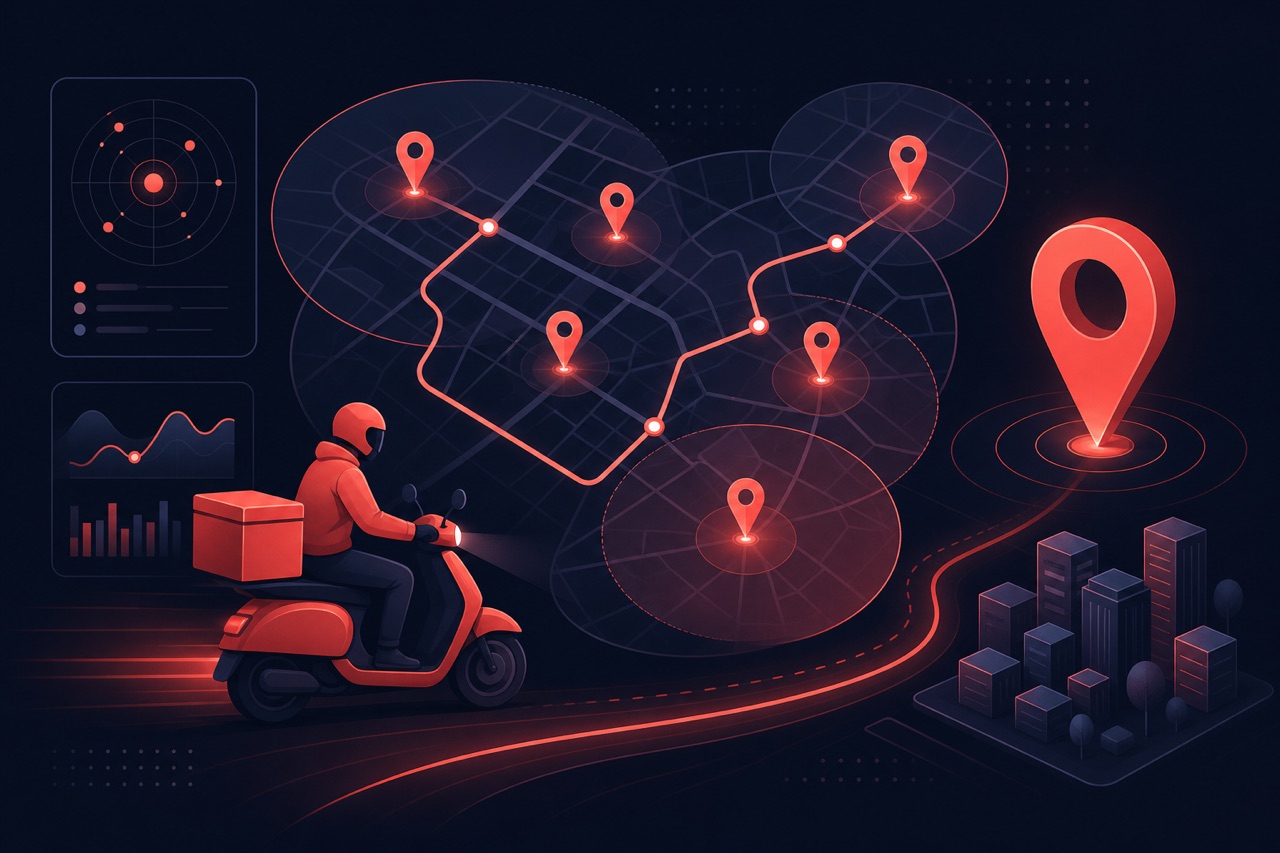
Delivery zone and courier optimization is the practice of shortening delivery time and controlling delivery cost by planning where, under what conditions and by whom deliveries are made.
Short answer
Delivery zone and courier optimization is the process of both shortening delivery time and lowering cost by planning the areas served, each zone's minimum basket and fee, courier assignment and routing logic. The goal is to preserve service speed while keeping unprofitable distant orders under control.
Definition
A delivery zone defines the geographic area a business serves and the rules of that area (minimum basket, delivery fee, estimated time). Good zone design prevents unprofitable distant deliveries and bloated times.
Courier optimization is the logic of assigning an order to the right courier at the right time and combining nearby orders. The goal is to reduce idle time and unnecessary distance.
How does it work?
The typical setup that optimizes delivery is as follows:
- The service area is divided into zones; a minimum basket and fee are defined for each zone.
- The estimated delivery time is shown to the customer based on the zone.
- When an order arrives, a suitable courier is assigned; nearby orders can be combined.
- Delivery status (on the way, delivered) is tracked.
- Time and cost are analyzed by zone and the rules are updated.
Benefits
Well-planned delivery protects both the customer and the margin.
Shorter delivery time
The right assignment and routing logic reduce waiting and distance.
Controlled cost
Zone-based fees and minimum baskets prevent unprofitable deliveries.
Clear customer expectations
Because estimated time and fee are shown in advance, satisfaction increases.
Measurable delivery
Bottlenecks are identified and improved with zone and courier data.
Components of delivery optimization
Delivery zone and courier management is made up of these parts:
Zone definition
Defining a delivery area by drawing a polygon on the map or by distance/postal code.
Fee and minimum basket by zone
Setting a different delivery fee and minimum order for each delivery zone.
Courier assignment
Assigning an order to a suitable courier manually or automatically by availability/location.
Route and batch delivery
Grouping nearby addresses to deliver them in a single trip.
Live tracking and status
Reflecting the courier's location and delivery status to the customer and the panel.
Time and performance
Tracking average delivery time and per-zone delay analysis via reports.
Related technical guides: delivery management, restaurant operations management, peak-hour kitchen flow.
Best practices
In delivery and courier planning:
- Draw zones based on real delivery times; define them clearly on the map.
- In distant zones, set the minimum basket and fee to protect profit.
- During peak hours, increase courier efficiency by combining nearby orders.
- Give a realistic estimated time; exaggerated promises produce dissatisfaction.
- Regularly review zone-based time/cancellation data.
Related guides and solutions
Frequently asked questions
- Why is the delivery zone important?
It defines the service area and its rules. If not designed well, distant, unprofitable and late deliveries lower both margin and satisfaction.
- How is courier assignment optimized?
By assigning the order to a suitable courier on time and combining nearby orders. This way idle time and unnecessary distance decrease.
- Why is a minimum basket needed?
To cover the delivery cost of small and distant orders. A minimum basket by zone keeps delivery profitable.
Summary
Delivery zone and courier optimization shortens delivery time and controls cost by planning zone rules, pricing and courier assignment. When measured with zone and courier data, both customer satisfaction and margin are protected.
Get started
Contact us about an online ordering solution for your business and start taking orders on your own channel with Yededoy.